It’s a culture that embodies “urban, sophisticated, and stylish fashion,” starting with tasteful music that samples Western music and extending to fashion and lifestyle.
This time,
- What is Shibuya-kei?
- Musical characteristics and representative artists
- Is Shibuya-kei a culture?
- The person who spearheaded the Shibuya-kei movement
- Values that emerged from music
- Elements that shape the Shibuya style
- The decline of the Shibuya-kei movement
- The subsequent influence of Shibuya-kei
I will explain it in that format.
What is Shibuya-kei?
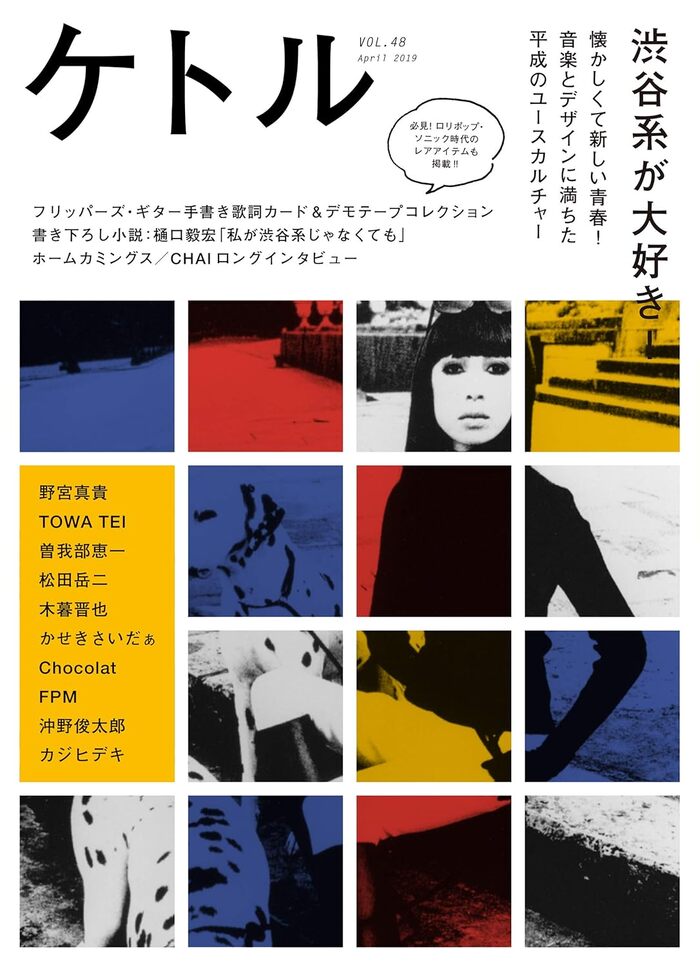
A magazine featuring Shibuya-kei music, published years later. (Quoted from ohtabookstand)
Shibuya-kei is a music movement that emerged in the early 1990s, originating in Shibuya, Tokyo.
It is a uniquely Japanese culture, and its central element is stylish music that is heavily influenced by Western music.
The term “Shibuya-kei” was originally a retroactive term coined in the early 1990s by music magazines, CD shops, and record stores.
Since the internet didn’t exist back then, the “Shibuya-kei” style spread almost unnoticed, like word of mouth.
Therefore, it would be more accurate to describe Shibuya-kei not as a musical “genre,” but as a “movement.”
And, related to that music, the “Shibuya-kei” lifestyle expanded to include fashion, interior design, and even ways of enjoying life in Tokyo, creating a vibrant and exciting trend.
Musical characteristics and representative artists
Flipper’s Guitar’s 3rd single, “CAMERA! CAMERA! CAMERA! – Camera! Camera! Camera!” (1990)
Musically, they draw inspiration from overseas music of the 60s to 80s, skillfully mixing it to create a sophisticated and urban sound.
Genres frequently referenced in the Shibuya-kei scene included French pop, neo-acoustic, bossa nova, and soft rock.

Flipper’s Guitar (quoted from ja.namu.wiki)
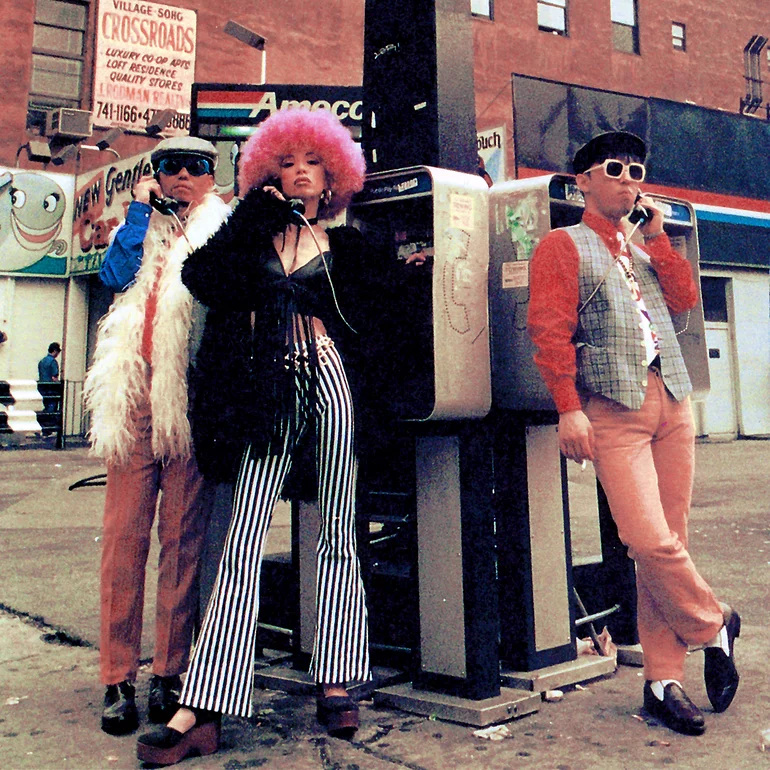
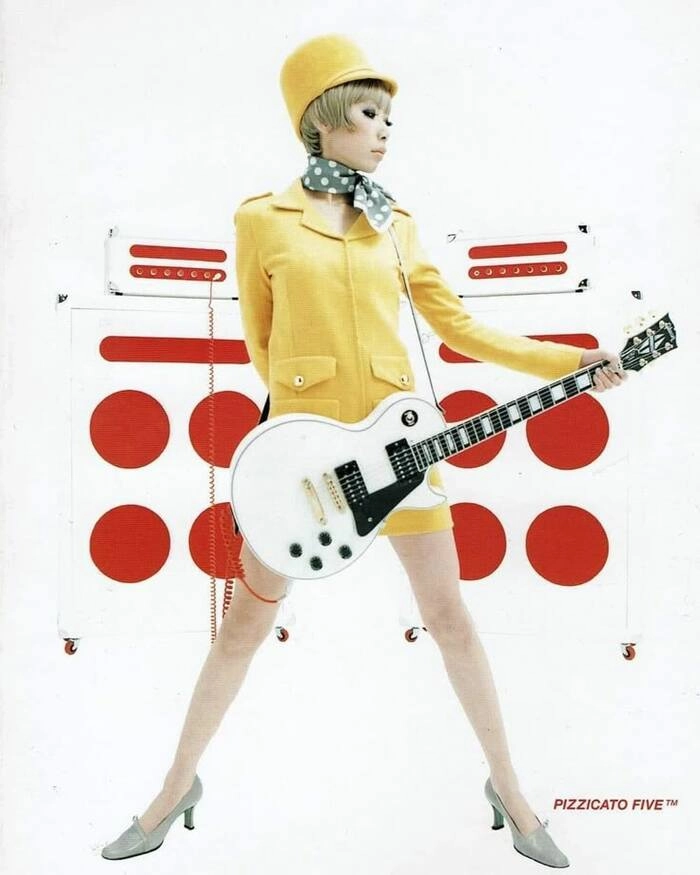
Pizzicato Five (quoted from last.fm)

Original Love quote yotobari-tobari
Some representative artists would be Flipper’s Guitar, Pizzicato Five, Original Love, Hideki Kaji, and Kahimi Karie.

Kaji Hideki (quoted by tamayori)

Kahimi Karie (quoted from last.fm)
Among them, “Flipper’s Guitar,” “Pizzicato Five,” and “Original Love” are known as the “Big Three” of the Shibuya-kei scene.
In particular, Flipper’s Guitar, consisting of Kenji Ozawa and Keigo Oyamada, was at the heart of the Shibuya-kei movement.
Also, although they aren’t exactly from the heart of the Shibuya-kei scene in terms of their age, Schadaraparr is a group that has ties to the Shibuya-kei movement.

quotes pinterest
Kenji Ozawa featuring Schadaraparr, “Konya wa Boogie Back” (1994)
He was frequently recommended in CD shops in Shibuya, and in 1994 he released “Konya wa Boogie Back” with Kenji Ozawa, so he was deeply involved in the Shibuya-kei movement.
Incidentally, Takao Tajima of Original Love reportedly shouted “I’m not Shibuya-kei!” at a live performance in 1994, expressing his dislike of being “symbolized.”
However, since they were artists promoted by CD and record shops in Shibuya, they were often introduced as part of the “Shibuya-kei” scene.
What kind of culture is Shibuya-kei?
It’s often said that the Shibuya-kei movement itself has aspects of a kind of counterculture.
In the mid-1980s, before the rise of Shibuya-kei, the dominant style of music at the time was rock, characterized by a robust, powerful, and energetic sound, exemplified by artists like Bowie, Anzen Chitai, and Rebecca.
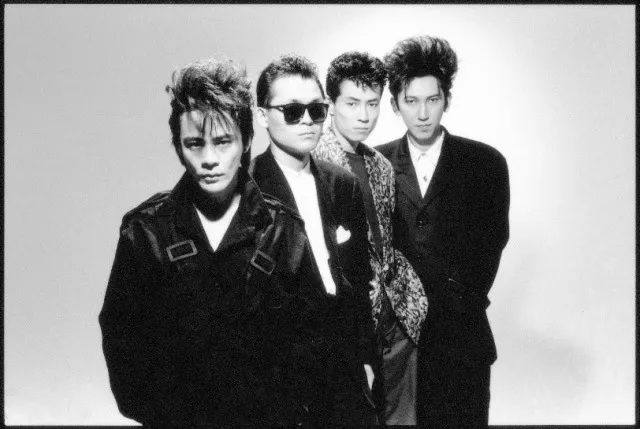
BOØWY Quote ryoban-disc
Bowie, in particular, was at the height of his popularity as a cool band that exuded an aura of being “rebellious and wild!” thanks to his lyrics, sound, and masculine looks.
Also, from the late 1980s to the early 1990s, a TV program called “Ikasu Band Tengoku” (Cool Band Heaven) was broadcast, and music sung with emotion in Japanese became popular, leading to the “Ika-Ten boom” and the “band boom.”

The band “BLANKEY JET CITY” appeared many times on the TV show “Ikasu Band Tengoku” (Cool Band Heaven). (Quoted from poptrip2.seesaa)
It is said that people who felt that such music was “overbearing, overly emotional, and lacked taste” and “I know better music than that” created cool music as a counter-movement (rebellion). (There are various theories.)
And the Shibuya-kei movement underwent a major transformation from the late 1980s to the early 1990s.
The person who spearheaded the Shibuya-kei movement
The “Shibuya-kei” movement spread gradually through word of mouth, but in reality, there was a key figure behind the scenes who orchestrated it.
Here, I’d like to introduce four particularly important individuals.
Yasuharu Konishi

Yasuharu Konishi (quoted from Brutus)
First up is Yasuharu Konishi.
Konishi, a former member of Pizzicato Five, possesses a deep knowledge of pop music, is known as a record collector, and is also skilled in music production.
Before Pizzicato Five’s breakthrough, Konishi produced and released an album by “The Phantom Gift,” a band that primarily played in the “Neo GS” music genre.

The Phantom Gift (quoted from midiinc)
Neo-GS is a genre that evolved from Group Sounds, primarily from the 1960s onward.
Back in an era when the term “J-POP” hadn’t even become widespread, Konishi felt that this kind of uniquely Japanese music, like Neo-GS, was “purely good music,” and he possessed the skills to produce albums himself.

Konishi-san (left) during his time with Pizzicato Five (Image source: Bandcamp )
Regarding the Shibuya-kei movement, it’s believed that Konishi, as a member of Pizzicato Five, utilized his production skills to build the overall framework of the “Shibuya-kei” movement.
Hiroshi Ota

Hiroshi Ota (quoted from natalie.mu/music)
Furthermore, one of the key figures behind the Shibuya-kei movement is Hiroshi Ota, who worked as a merchandiser (buyer) at HMV Shibuya in the early 1990s.
Ota, who loves Western music, started her career as a record store clerk at “Shinseido.”
Later, when the first HMV store opened in Shibuya, I started working as a staff member at the HMV Shibuya store.
When he took charge of the Japanese music section, he created his own unique sales area, including the legendary “SHIBUYA RECOMMENDATION” corner.
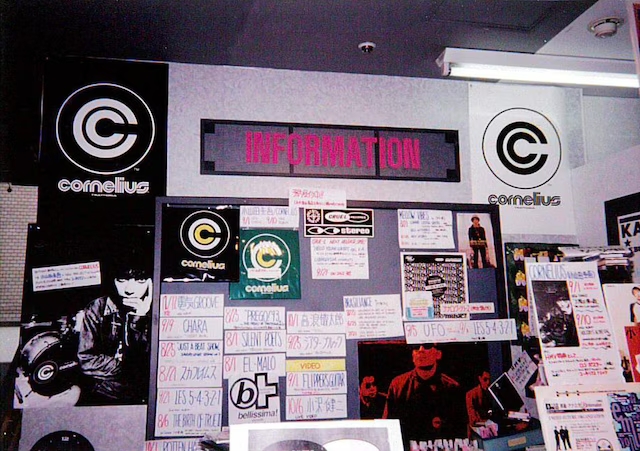
SHIBUYA RECOMMENDATION section (quoted from natalie.mu/music)
In this section, we recommended CDs by artists who would later be known as “Shibuya-kei,” using a style similar to the descriptions found on imported albums, and promoted Shibuya-kei artists.
Among them, bands like Flipper’s Guitar and Pizzicato Five were also featured.
It gradually gained popularity, and as a result, the music charts at HMV Shibuya began to move in a completely different way from those of other CD shops nationwide.
This style of recommending products was groundbreaking at the time, and in an era without the internet or music streaming, it played a crucial role in directly capturing the hearts of customers who actually visited the store.
Furthermore, the “SHIBUYA RECOMMENDATION” section became a catalyst for the spread of the term and movement known as “Shibuya-kei.”
Masayuki Kawakatsu

Masayuki Kawakatsu (quoted from natalie.mu/music)
And the other person is Masayuki Kawakatsu.
Kawakatsu is a writer and editor who is particularly knowledgeable about Japanese pop culture, including music and movies.
Calling himself a “pop addict infected with the pop virus,” he has been active in magazines and other media since the 1980s, and in the 1990s, he actively shared his experiences of the pop culture scene, including club culture and Shibuya-kei.
Quote from Kawakatsu’s book “The Pop Addict’s Final Journey” (yodobashi)
He was one of the first to discover bands like Pizzicato Five, Flipper’s Guitar, Schadaraparr, and Original Love, and introduced them in magazine columns and radio programs.
This led to the emergence and widespread adoption of the “Shibuya-kei” style in the media.
This suggests that in the days before social media, information from magazines and radio was extremely valuable.
Mitsuo Shindo

Quoted from Casabrutus by Mitsuo Shindo
And finally, one of the people who contributed to creating the visual image of Shibuya-kei was art director Mitsuo Shindo.
He designed numerous CD jackets for Shibuya-kei artists, creating the retro and pop image of Shibuya-kei. (

Image of a design by Shindo, quoted from ginzamag)
The visuals that Shindo created were all catchy and fashionable, to the point that they later influenced fashion associated with the Shibuya-kei movement.
While “Shibuya-kei” is often seen as a youth culture that emerged seemingly out of nowhere, there’s an underlying aspect to it: sophisticated adults clearly indicated that “this is cool.”
Values that emerged from music
Gradually, the term “Shibuya-kei” came to encompass not only music, but also fashion and lifestyles related to music.
A trend has spread where people want to make even everyday actions, such as what to wear, where to go on a date, and what to eat, look stylish.
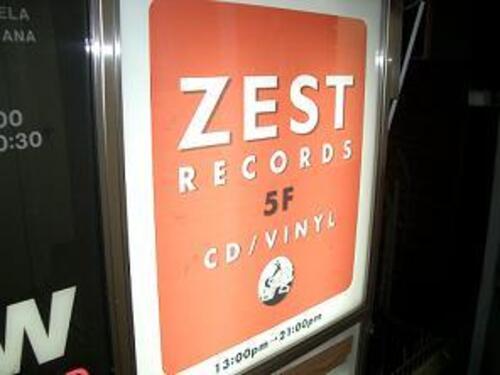
“ZEST,” where Hideki Kaji also worked part-time (quoted from exblog)
The young people surrounding the Shibuya-kei scene at the time would frequent “ZEST,” an import record shop in Udagawa-cho that the two members of Flipper’s Guitar also often visited, absorb new and great music at live music venues and clubs, and go to concerts by up-and-coming international musicians…

SLITS (formerly ZOO), a club that produced many Shibuya-kei artists (quoted from Pinterest)
It’s become common for things like “what you listen to” and “where you spend your time” to be considered fashionable.
And in terms of clothing, it also evolved into a trend of “If you’re listening to this music, this is the kind of outfit that’s appropriate.”

“Supersonic Pizzicato Five” (1991) – quoted from Columbia
Styles based on such thoughts, like “I wear stripes because I like French pop” or “I want to live in a world like the one on the album cover of Pizzicato Five,” were considered cool.
However, they apparently emphasized that music and the culture surrounding it were the main focus, and fashion was merely an extension of that.
Elements that shape the “sense” of Shibuya-kei
fashion

The role model of the time: Flipper’s Guitar (quoted from Pinterest)
Fashion trends common in Shibuya at the time included slim-fitting jackets and pants, French school-style striped T-shirts, checkered pants, 60s revival mod-style outfits, loafers, round glasses, berets, white jeans, and vintage Levi’s.

Flipper’s Guitar was popular for their sophisticated casual style. (Quoted from Pinterest)
I think the two members of Flipper’s Guitar were the model for the clothing style around this time.
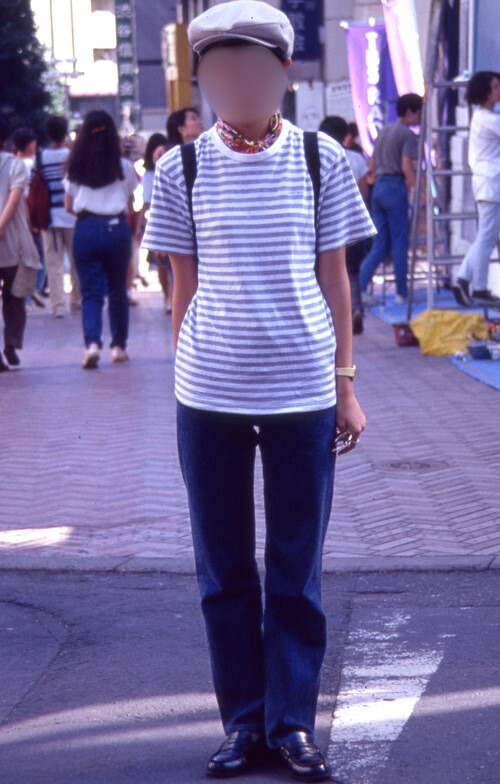
Shibuya-style fashion at the time (1991) (quoted from web-across)
For women, striped T-shirts and berets were popular, and many seemed to prefer a French student-style look.
At the time, the dominant style was the kind featured in the immensely popular magazine “Olive,” which embodied the idea of ”wearing nice clothes, but looking stylish and unpretentious!”
Also, influenced by Maki Nomiya of Pizzicato Five, there was apparently a high demand for 1960s-style A-line dresses and colorful mini-skirts.

Maki Nomiya (quoted from Pinterest)
A key characteristic is that both men and women are conscious of creating a sophisticated and stylish urban atmosphere.
Popular brands included Beams, United Arrows, Agnès b., and MILK.
Along with Agnès b., APC was also a very popular brand to choose when dressing in a French casual style.

Olive in 1991 (quoted from melkdo.jp)
However, when wearing branded clothing, she apparently made sure to keep the “brand logo” and “brand-like” elements to a minimum, and to maintain an intellectual image, prioritizing the impression of “wearing branded clothing naturally.”
Shibuya Parco
And speaking of places essential to Shibuya-kei fashion, there’s “Shibuya Parco.”

Left: “Parco PART-1” Right: “Parco PART-2” (Image source: jaa2100.org )
Opened in 1973, “Parco Part-1” was positioned from the outset as a cutting-edge “cultural hub” where not only fashion, but also music, art, and magazine culture intersected.
In the 90s, the area was home to select shops and designer brands that appealed to the cynical youth of the time, such as APC, mercibeaucoup, and Né-net. It also functioned as a gateway to music, with many stores selling Tower Records, zines, and music-related goods.
It’s said that going to Shibuya Parco wasn’t just about looking at clothes; it was also a place to “search for” culture, and it led to a self-image of “someone who frequents Shibuya Parco = someone with a high level of cultural sensitivity.”

A sale advertisement featuring Pizzicato Five on a poster (2001) – quoted from news.yahoo
Furthermore, the fact that artists like Kenji Ozawa, Schadaraparr, and Pizzicato Five were active in Shibuya Parco’s advertisements and events, symbolizing the Shibuya-kei image, is likely one of the reasons why more people are visiting Shibuya Parco.
Kyoko Okazaki’s manga

Kyoko Okazaki (quoted from aidoly)
Furthermore, when discussing the Shibuya lifestyle, Kyoko Okazaki’s manga is also an important element, wouldn’t you say?
Okazaki has published numerous manga depicting the realistic daily lives of young people in the city in the 1990s, who, while surrounded by music, fashion, cafes, and magazines, still harbored a sense of emptiness and loss.

Rivers Edge (quoted from InRedWeb)
In particular, titles like “PINK” and “Rivers Edge” gained popularity among young people because they were serialized in magazines such as “New Punchzaurus” and “CUTiE.”
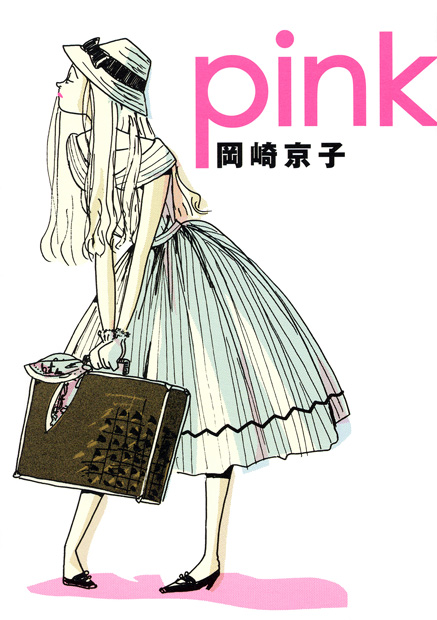
PINK (quoted from magazineworld)
While her work didn’t directly focus on the Shibuya-kei movement itself, it sharply captured the atmosphere of the time, including themes like “escapism,” “the happiness of consumer society,” and “complex love,” and garnered strong support from those surrounding the Shibuya-kei scene.
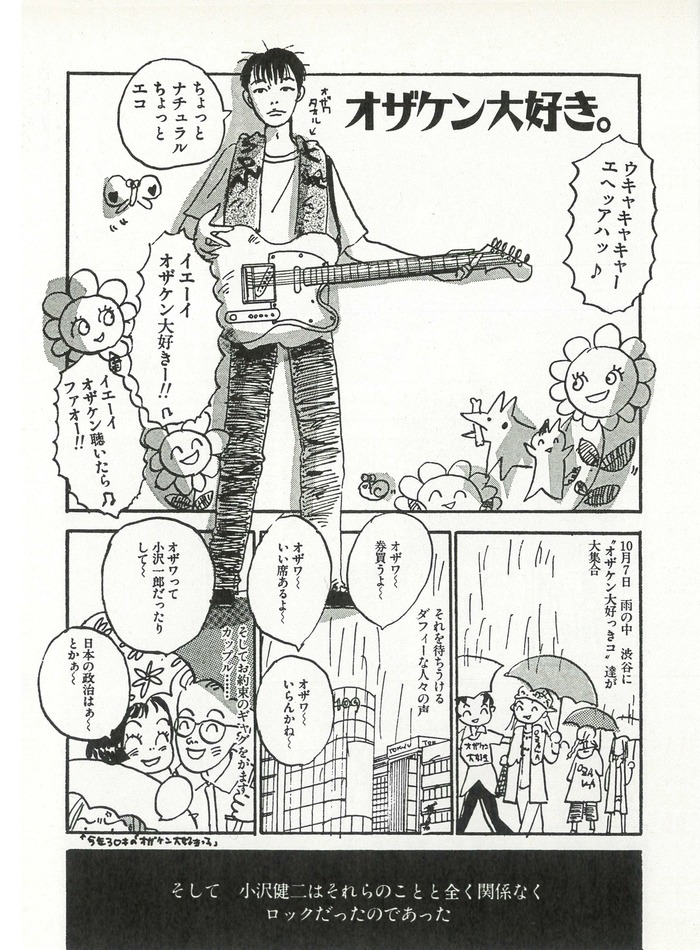
“I love Ozaken,” an illustration drawn by Okazaki for “Monthly Kadokawa” (quoted from natalie.mu/music)
Incidentally, the fact that Okazaki was a fan of Flipper’s Guitar, and that Kenji Ozawa was also a fan of Kyoko Okazaki, may have been another reason why the Shibuya-kei crowd read her manga.
In an era where listening to music, decorating one’s room, and reading manga were all forms of “expressing one’s taste,” Kyoko Okazaki’s manga was perfectly aligned with the spirit of Shibuya-kei.
Magazine ‘BARFOUT!’
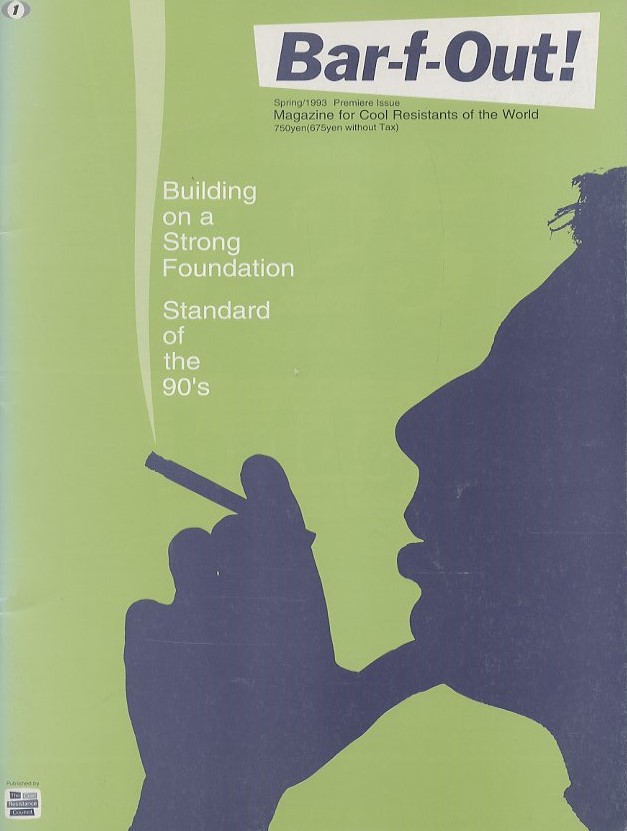
BARFOUT! Spring 1993 issue quote book-komiyama
When talking about influences on the Shibuya-kei scene, one cannot overlook the cultural magazine “Barfout!”.
Barfout! is a youth culture magazine that reflects the times, featuring artists, DJs, musicians, and more.
Compared to Popeye and Olive, which focused more on fashion and lifestyle, Barfout! introduced Shibuya’s club scene, cafe culture, and on-the-ground reports from record shops, delivering Shibuya-kei culture from its own unique perspective.

BARFOUT! Spring 1993 issue, page 1. Quoted from book-komiyama.
Furthermore, since it was launched in 1992 during the heyday of the Shibuya-kei scene, I think one of the reasons for its popularity was that it featured many interviews with Shibuya-kei artists and highlighted people who were not yet widely known at the time.
This shows that the Shibuya-kei movement had a high affinity with print media, including magazines, precisely because it was in an era before the internet was developed.
The decline of the Shibuya-kei movement
The Shibuya-kei movement, which flourished in the 1990s, began to decline around 1995.
First, a symbolic event was the emergence of the band “Sunny Day Service.”
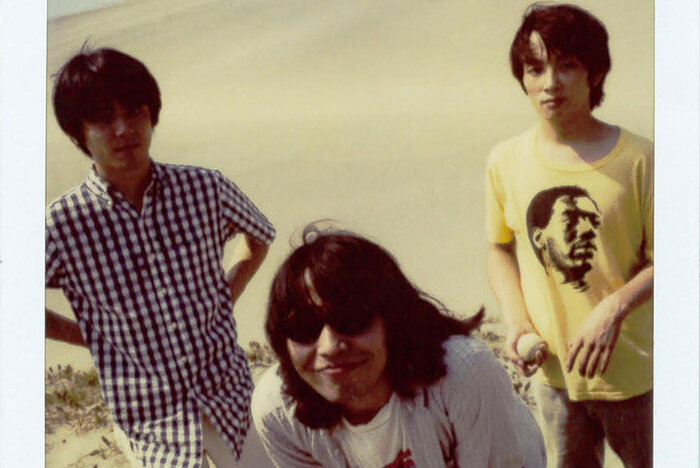
Sunny Day Service (quoted from cinra.net)
While Shibuya-kei had previously created its own unique music by skillfully mixing in Western music, Sunny Day Service incorporated and released music from within Japan.
Keiichi Sogabe, the vocalist and guitarist, originally formed the band because he admired the Shibuya-kei scene, but it seems that back then, if you didn’t have connections with bands like Pizzicato Five, you wouldn’t be recognized as part of the Shibuya-kei scene.
So, Sogabe decided to create music that incorporated traditional Japanese music, deliberately going in the opposite direction from the Shibuya-kei movement.
Originally, Shibuya-kei music was a counter-movement to Japanese pop music of a slightly older generation, but Sogabe broke through that barrier by adopting a style that was completely focused on Japanese pop music.
It developed into a kind of counter-counter-counter dynamic, and as a result, Shibuya-kei was swept away by a new wave of music.
Furthermore, the fact that Shibuya-kei artists stopped performing at clubs is also cited as one of the reasons for the decline of the Shibuya-kei scene.

A poster (1992) featuring Keigo Oyamada in a Shiseido ‘UNO’ commercial. (Image source: Pinterest )
It’s said that Shibuya-kei artists became busy after achieving success, stopped going to clubs, and consequently lost their fans… This is why their popularity declined.
In the 2000s, it gradually lost its clear form as a “genre” and eventually faded away as a fleeting trend.
The temporary hiatus of key figures such as Kenji Ozawa and Keigo Oyamada (solo artist name Cornelius), as well as the shift in musical trends towards R&B and hip-hop, were also contributing factors.
The subsequent influence of Shibuya-kei
However, the cultural influence brought about by the Shibuya-kei movement has become deeply rooted in Japanese music and fashion ever since.
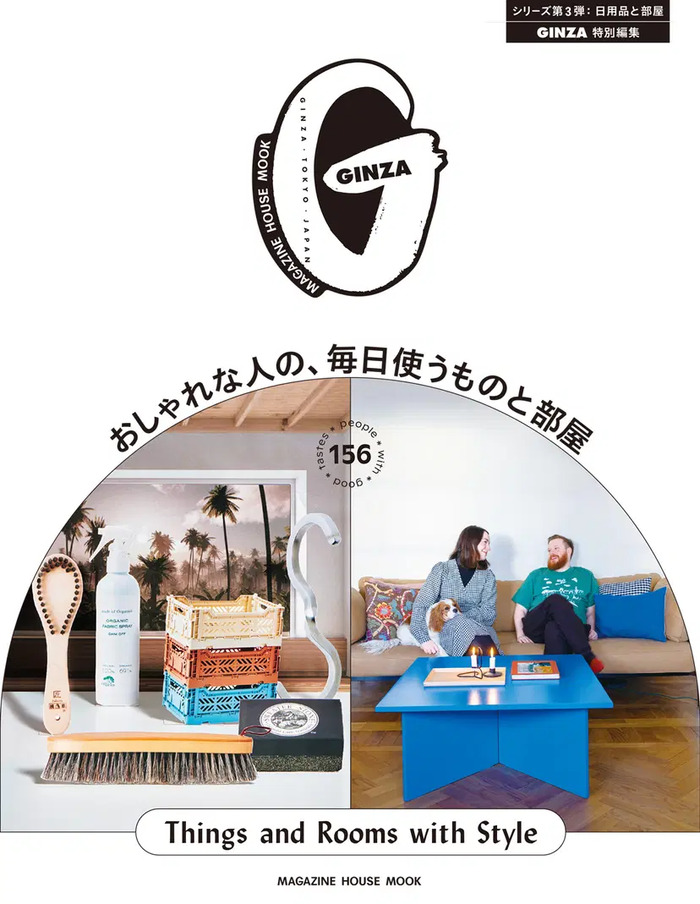
GINZA 2023 (quoted from ginzamag)
I believe that the idea of ”fashion equals lifestyle,” and the way people edit their own lives based on that, is something that stylish people of all generations naturally possess today.
This sensibility has been passed down to Generation Z, and the way they express their “sense of style” through Spotify playlists, zines, cafes, interior design, and other elements via social media is something that Shibuya-kei pioneered.
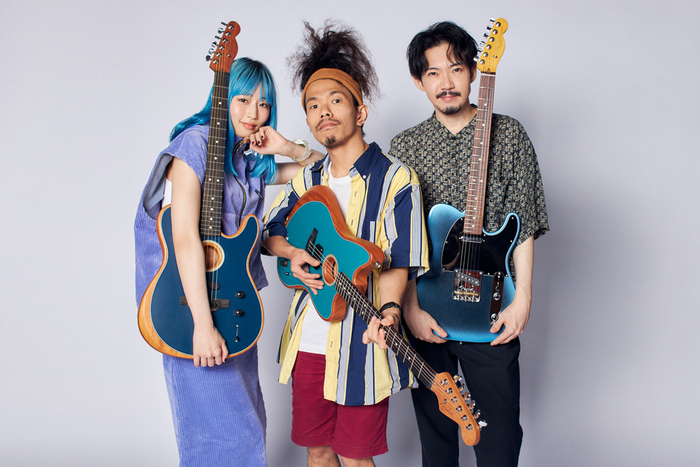
Awesome City Club (quoted from Fender News)
In terms of music, bands that emerged in the 2000s and later, such as “Awesome City Club” and “Yogee New Waves,” can be said to be reinterpreting the characteristics of Shibuya-kei, such as its Western music influences and sophisticated, urban sound, in a modern way.
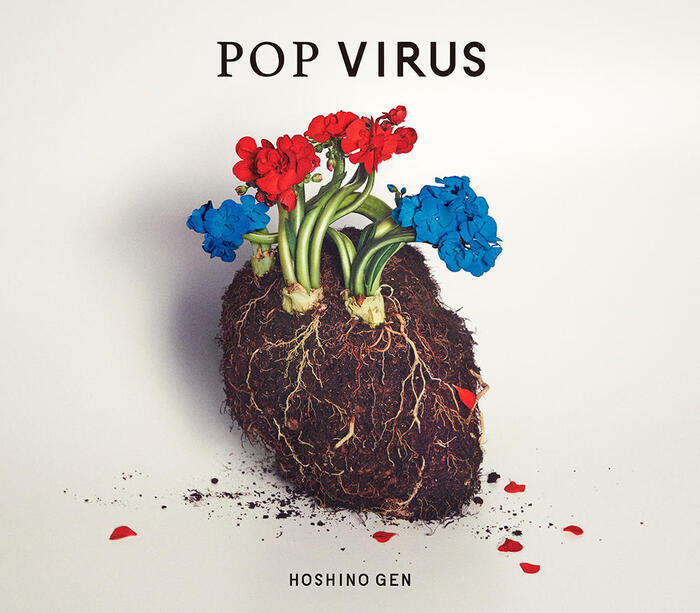
Gen Hoshino’s album is named after the “pop virus” concept described by Masayuki Kawakatsu. (Quoted from musicman)
Furthermore, the style of presenting music by layering it with cultural and literary contexts, as seen in artists like Gen Hoshino and Sakanaction, can be said to be a continuation of the Shibuya-kei aesthetic of “hobbies becoming style” into the modern era.
The Shibuya-kei movement ended relatively quickly, but its influence was significant, and its aesthetic still permeates certain circles today.
Related articles
Please also check out this article!

To those who have read this far
Thank you for reading this far.
“Shibuya-kei” is often discussed in contrast to “Ura-Harajuku” when talking about youth culture in Tokyo in the 1990s.
Although there were significant differences in direction regarding music, fashion, and lifestyle, I think the youth culture of that era was incredibly powerful.
Cultures like Shibuya-kei and those from Ura-Harajuku may continue to exert influence and form the foundation for various unique Japanese cultures in the future.
KLD is also strengthening its purchasing of brands associated with the Shibuya-kei scene, such as Agnès b. and APC.
With staff members specializing in appraising a wide range of brands, both imported and domestic, we can offer confident and highly accurate valuations.
When it comes to mail-in buyback services, many people probably have concerns such as ,
“Won’t it take too long?”, “It seems like a hassle…”, or “They might lower the buyback price to cover the shipping costs…”
Actually, that’s not the case.
At KLD, we maintain a high level of buyback prices by limiting the brands we handle to a certain extent.
Of course, shipping and cancellation fees are also free!